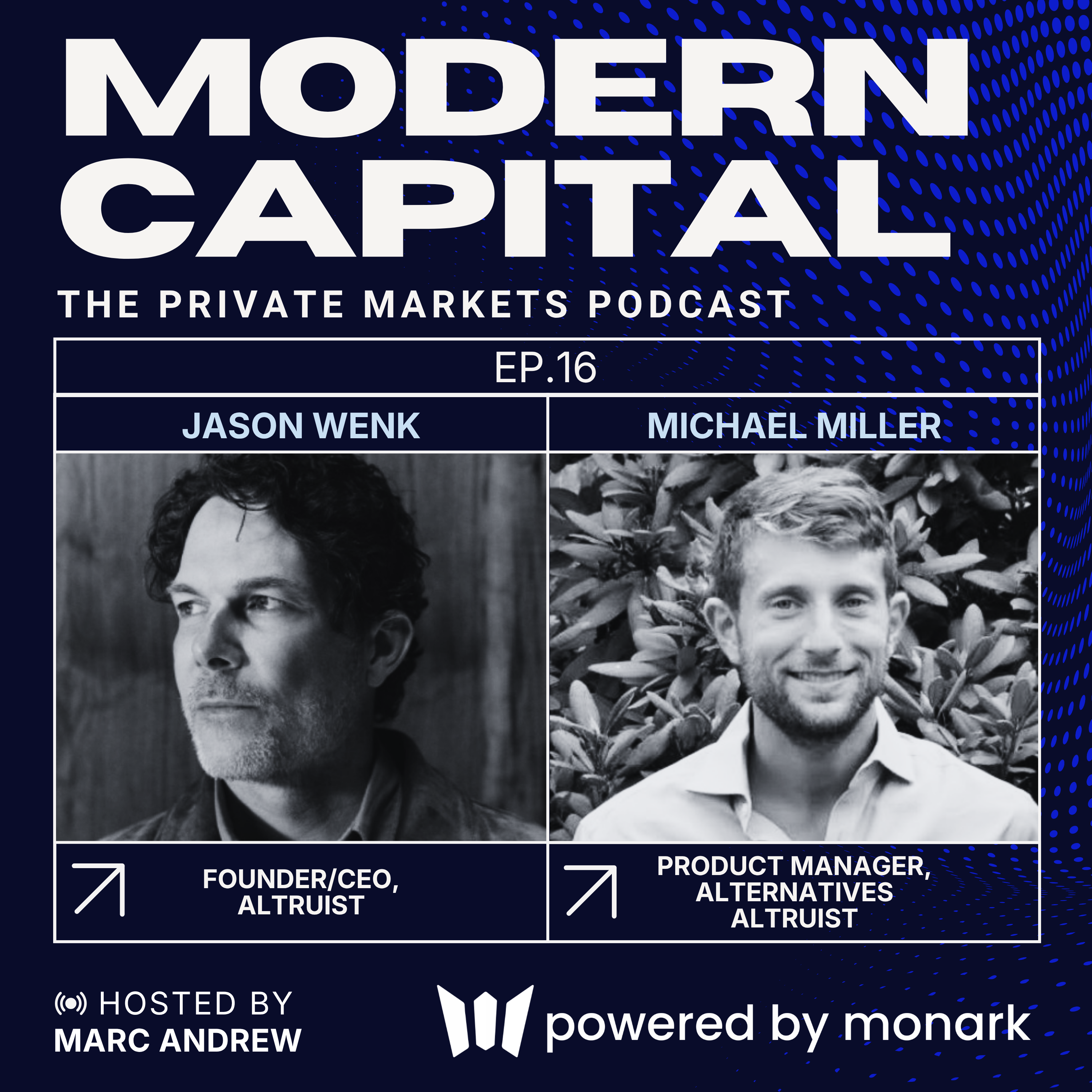



The infrastructure layer private markets has been missing is being built. The question is whether the industry can move fast enough to meet the demand that's already here.
There are fewer than 4,000 public companies in the United States. In the late 1990s, there were 8,000.
The companies that left public markets didn't stop creating wealth. They simply stopped being accessible to ordinary investors.
The world’s most sophisticated institutional investors know this. The Ontario Teachers’ Pension Plan, widely regarded as one of the global leaders in institutional investing, is 60% allocated to alternatives. The average high-net-worth individual is under 2%.
That gap isn't a knowledge problem.
It's an infrastructure problem.
Jason Wenk built Altruist to close it. Not with a new fund structure or a regulatory exemption, but by rebuilding the plumbing from scratch. He spent over a decade building middleware on top of legacy custodial infrastructure before concluding the ceiling was structural. In 2018, he stepped down and built a self-clearing custodian: one of the rarest things in financial services.
Michael Miller came from Robinhood, where he worked on product strategy for brokerage and IPO access. At Altruist, he's building the private markets layer on top of that same infrastructure, working toward the thing the industry hasn't cracked: alternatives that move as fast as a public equity trade.
In this episode of the Modern Capital Podcast, Jason, Michael and Marc cover:
"You kind of go, hey, I want the people that I grew up with and the families I knew, I want them to be able to have a fighting chance. And you can't do that if the minimums are 20 times higher than how much capital they have."
The infrastructure layer private markets has been missing is being built. The question is whether the industry can move fast enough to meet the demand that's already here.