Good morning from High Street Kensington (aka: just slightly northwest of Albertropolis, see below 😄), where I type in anticipation of my family’s arrival in a few hours on BA 084 out of Vancouver…
of CENTRAL importance: this heat wave appears to be breaking! A week ahead in a non-air conditioned London flat would have been… less than ideal. But the forecast now looks ideal to show this grand city off through a 6 year old’s eyes, and I am thrilled.
Thursday’s Private Markets Technology Summit was a success - my warmest thanks to all those who attended, spoke and supported it.
This was always meant as an omnibus sort of event - an introduction to the idea that private markets infrastructure is a technology category… that we need to properly think about scale: how to integrate the conversations around implementing TPA, how to drive public-private market data convergence, AI of course, the integration of the wealth channel through protocols and rails.. all this in a single day!
And I think it generally succeeded in that. It certainly produced lots of ideas on how we can coalesce key actors to drive momentum on these topics for the builders.
That is PMF’s abiding goal and it’s certainly what gives me energy to do this work.
Stay tuned for a summary of the conversation that we’ll release soon…
We held the event at the RSA, an institution that has spurred innovation and collaboration across commerce, engineering and manufacturing for more than 250 years. So it was a fitting host.
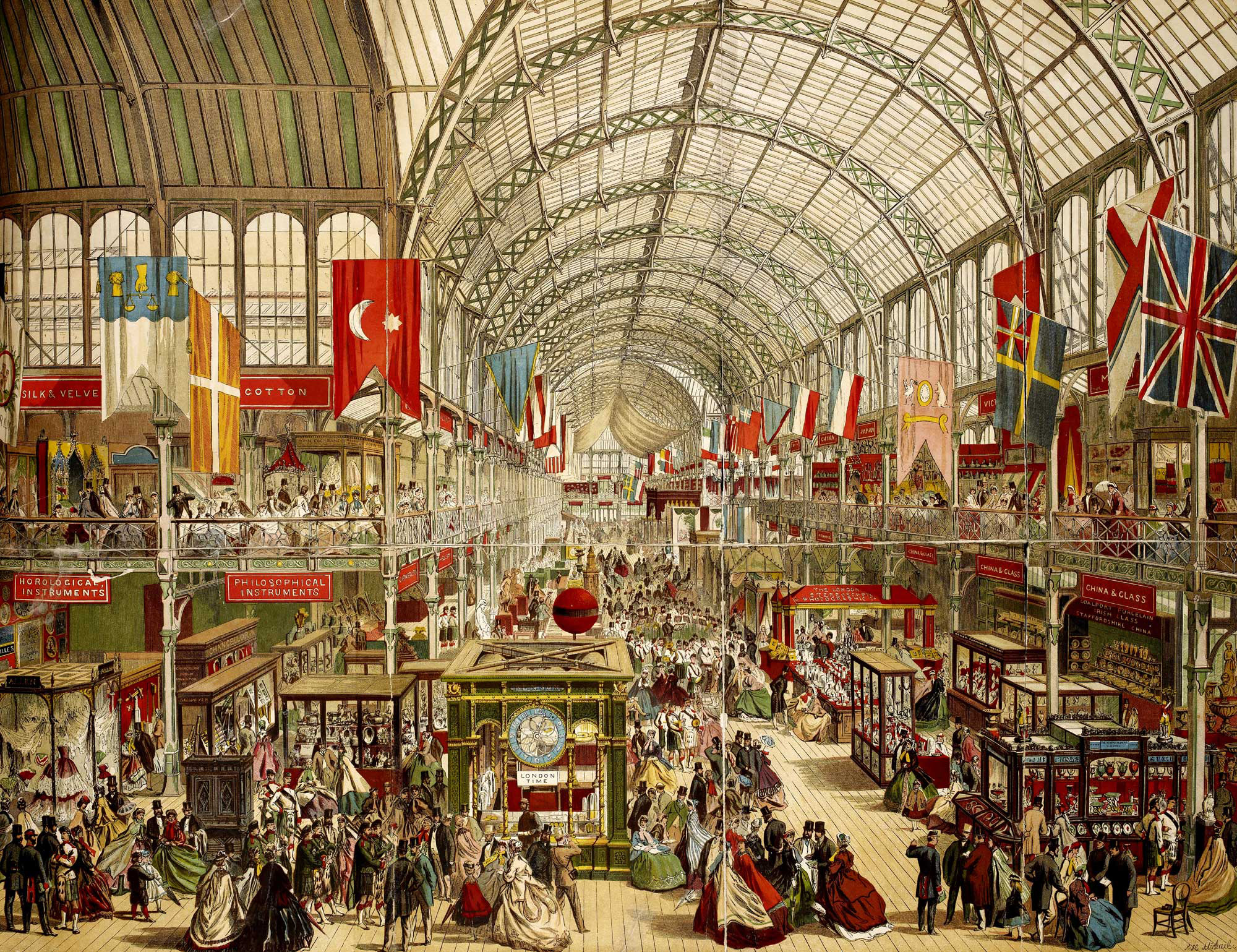
I spoke briefly off the top of the RSA’s history in staging the Great Exhibition of the 1850s, which earned such a profit that the net income was seeded into the grand institutions of Albertropolis: The V&A, the Science Museum, the Natural History Museum, the Royal Geographical Society, even Imperial College.
How amazing is that? An event held such a profit that it seeded an endowment of some of the world's finest museums. What planning and foresight and legacy.
Come to think of it… the world needs a new type of Great Exhibition. I find it somewhat exasperating that the leaders of the world’s most important modern organisations (the AI frontier labs) have repeatedly cast a kind of gloom over AI’s impact. This technology is now clearly the central driver of action and economic and social development in our world. It is up to us to decide what impact AI has on us.
A new type of Great Exhibition could show the power and potential and opportunity that AI can deliver across so many domains.
We need to re-capture some of that Victorian era optimism! Ben Haber and I have chatted about this. Where would we do it? Let's discuss if you like the idea.
Speaking of AI - I think I understand it better now:
Charlie Pickell, Daniel Wheller and the Hebbia team hosted a wonderful dinner in Mayfair after the event Thursday (thank you for the invitation). And conversation with Danny and CPPIB’s Daniel Wrobleski during dinner helped me understand that AI is really a skill:
You’ll often hear talk of AI as a new general horizontal technology on the par with electricity, and that's half right. It is powerful like electricity, but unlike it, intelligence is variable. Your skill at using it determines your outcome. Just like underwriting credit is a skill.. just like investing is a skill
Danny explained to me that Hebbia doesn't want to be automating low-skilled work. They want to be codifying the judgement of a team's highest-skilled work to scale it.
Simon Knowles from Tower Peak Partners gave a terrific short talk on Thursday along these same lines…
So unlike electricity as a kind of current that’s either on or off. AI is a variable type of power that might just be endlessly variable in its capacity, according to its user.
This week was spent right beside the LSE, where I studied economic history exactly 20 years ago.
The most lasting imprint of anything I read then was the work of Douglass North, who was the key figure in a school of economic history called the New Institutional Economics. I think of his work so often… almost weekly!
He sought to explain the differing national growth rates over time as the product of sets of institutions, both formal and informal. and that's what we're doing today when we discuss the infrastructure of private markets. We're taking institutions (much of them informal, bilateral, judgement calls, relationships) and seeking to make them more formal in a new way with technology, protocols, rules, codified intelligence. This is a new phase of financial infrastructure. The people building in it know who you are.
This is North’s most accessibly introductory essay if you’re interested.
Side note: How much do you read?
So often, to think that literally just sitting down and reading for 45 to 60 minutes a day is my most powerful tool possible.
It's the easiest one to put off, but also the one that returns the most every time I maintain the discipline or the habit.
Tied to this institutions idea: my recent podcast with Apollo’s Jake Walker, which was fully focused on the rails, the infrastructure, what it looks like to build neutral institutional rules for an industry. And the same for this conversation with Michael Gruener.
It’s kind of amusing that we need to build new types of private markets institutions to ensure private markets can offer their product to more types of investors than the institutions.
Sixth Street Growth’s recent 143 million investment in Chronograph felt like us moving into a new phase.
The Alts Tech space has been more frosty lately just like the rest of SaaS was, but investors are also realising that the systems of record, the data layers, are incredibly valuable going forward because the agents and the AI will have to call on them.
Hearty congratulations to Charlie Tafoya and the Chronograph team for the financing. I've also known Alex Goodman for some time and am so happy to see him get this investment done! It's a tremendous partnership all around.
speaking of Sixth Street… Patrick O’Shaughnessy’s recent podcast discussion with Alan Waxman on the state of private credit is the best thing I've heard. Finance always gets in trouble when it mismatches assets and liabilities, and that's effectively what's been happening of late in private credit.
Product design for private markets in the wealth channel is not anywhere done. The “semi-liquid” is not working. The argument that gating redemptions just means it’s working as intended isn’t strong. Maybe we need a zero liquidity product?
I’m working on a big new project to figure out just how many people would be open to that over the next few months… much more to come on that.
In closing, something I feel really, really strongly about:
We need to remember (and talk more about) the why of private markets…
It’s not just an extra percentile of return to portfolios over a decade. It’s growth. And it’s extending ownership over growth. People - especially young people - need to feel they have a stake in the change happening in the world.
And our purpose - as I see it - is to give more people a sense of an ownership stake, through more and better tools, as we build an information infrastructure that permits better allocation decisions for everyone.
if you've made it this far, thanks for reading. 😀
All of this was a fraction of the amazing conversations this week. To those others I shared terrific time, energy and drinks with - from best-selling authors to Wimbledon champions (seriously) - thank you!
Hope everyone has a terrific weekend and week ahead. We’re all just getting started.
Marc.